When I first ventured into mold design, it felt like stepping into a meticulous, almost secretive world where every curve and dimension mattered immensely.
I vividly recall the late nights spent perfecting a draft angle, the sheer frustration of a failed prototype, and that exhilarating rush when a complex mold finally ran perfectly on the shop floor.
It’s a career path that truly tests your limits, yet offers unparalleled rewards, especially now as our field undergoes such a profound transformation.
The industry isn’t waiting around; it’s sprinting. We’re seeing a rapid integration of Industry 4.0 principles, bringing advanced simulation tools and AI-powered generative design from abstract concepts right onto our workstations.
The demand for lightweight, sustainable materials is skyrocketing, forcing us to rethink traditional approaches and embrace innovations like additive manufacturing for intricate inserts.
This isn’t just about keeping up; it’s about anticipating the next big shift, from predictive maintenance to fully automated design workflows. It demands a different kind of expertise, a blend of traditional craftsmanship with digital fluency, but it’s an exciting journey of continuous learning.
I’ll make sure to inform you clearly!
Navigating the Digital Frontier: From CAD to AI-Powered Design

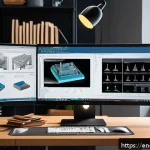
Stepping into today’s mold design landscape feels less like the traditional drafting board and more like a high-tech command center. I remember my early days, meticulously drawing lines, painstakingly checking tolerances by hand. That era feels light-years away now. The truth is, if you’re not deeply engaging with digital tools, you’re simply not competitive. It’s not just about CAD anymore; it’s about a holistic digital ecosystem. We’re talking about sophisticated simulation software that can predict warp and shrinkage before a single chip is cut, saving countless hours and astronomical material costs. I’ve personally witnessed projects that would have taken months of iterative physical prototyping be reduced to weeks, sometimes even days, through advanced virtual testing. This shift isn’t just about efficiency; it’s about pushing the boundaries of what’s even possible in mold geometry and performance, tackling complexities that were once pure fantasy. It’s challenging, absolutely, especially when you’re retraining your brain from tactile experience to digital prediction, but the payoff in terms of innovation and reduced waste is undeniable. It requires a different way of thinking, a willingness to trust the algorithms, and an even deeper understanding of the underlying physics that govern plastic flow and thermal dynamics. This journey from paper to pixels has been one of the most profound transformations of my career, truly reshaping the very core of what it means to be a mold designer today.
1. Mastering Advanced Simulation and Analysis
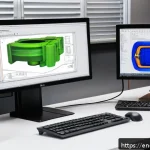
Gone are the days when mold design was a purely empirical art. While experience remains invaluable, the ability to predict material behavior under specific processing conditions has become non-negotiable. I recall a particularly stubborn component where we faced consistent sink marks. In the past, we’d have tried a dozen gate changes and cooling adjustments on the shop floor – each iteration costing tens of thousands. With modern Fill, Pack, and Cool (FPC) simulation software, we could pinpoint the exact issue – an uneven cooling channel distribution – within hours. It’s like having a crystal ball, but one powered by incredibly robust physics engines. Leveraging Finite Element Analysis (FEA) for structural integrity and Computational Fluid Dynamics (CFD) for cooling channels ensures that we’re not just designing a mold, but designing a *process*. This level of foresight allows us to optimize cycle times, minimize defects, and ultimately deliver higher quality parts with far greater predictability. It’s truly transformative. I’ve seen projects accelerate dramatically because we could validate complex designs virtually, often catching potential issues that traditional design reviews might miss until the very expensive steel was already cut. The precision and confidence this provides are unparalleled.
2. Embracing Generative Design and Artificial Intelligence
This is where things get really exciting, and, frankly, a little mind-bending. The concept of generative design, where AI algorithms explore thousands of design permutations based on performance requirements, was once confined to academic papers. Now, it’s a tangible tool that I’ve started integrating into my workflow. Imagine asking software to design a mold insert that maximizes cooling efficiency while minimizing weight, and it autonomously generates geometries you’d never dream of on your own. My first experience with this was frankly intimidating; it felt like I was handing over creative control. But then I saw the optimized, organic shapes it produced for a complex medical device component – geometries that significantly reduced part distortion and improved overall consistency. AI isn’t replacing the designer; it’s augmenting our capabilities, freeing us from tedious optimization tasks and allowing us to focus on higher-level problem-solving and innovation. It’s truly a collaborative dance between human intuition and machine intelligence, pushing the boundaries of what is geometrically and functionally possible in ways that human hands and minds alone might never conceive.
Revolutionizing Production with Advanced Materials and Additive Manufacturing
The materials landscape in mold design is evolving at an incredible pace, driven by relentless demands for lighter, stronger, and more sustainable products. I distinctly remember the shift from primarily steel and aluminum molds to considerations of specialized alloys and even ceramic inserts for high-wear applications. But what’s happening now goes far beyond that. We’re actively designing molds not just for new polymers, but also for intricate composites, bio-degradable plastics, and even recycled materials, each presenting its own unique set of challenges and opportunities for the mold builder. It’s no longer enough to just know how steel behaves; you need a profound understanding of how these diverse materials interact with tooling surfaces, what thermal properties they demand, and how their often higher processing temperatures affect tool longevity. This pushes us to think creatively about tooling material selection and surface treatments, making every project a fascinating puzzle to solve. It demands a lot of continuous learning, but honestly, it keeps the job fresh and incredibly engaging. The complexities introduced by these novel materials are often what push us to innovate the most, whether it’s designing for incredibly abrasive glass-filled nylon or delicate, heat-sensitive medical-grade silicones. Each material presents its own unique personality that the mold must perfectly accommodate.
1. Designing for the Next Generation of Polymers and Composites
I’ve recently been involved in projects that felt like venturing into uncharted territory. One particular challenge was designing a mold for an advanced thermoplastic composite, destined for an aerospace application. The material’s high melt temperature and abrasive fillers meant that conventional tooling would wear out in a fraction of the time. We had to explore specialized tool steels with incredible hardness and apply novel surface coatings that could withstand such extreme conditions. It wasn’t just about the mold’s geometry; it was about its material composition, its internal structure, and its resilience. Similarly, the surge in bio-plastics and post-consumer recycled (PCR) materials, while fantastic for sustainability, introduces new considerations like inconsistent melt flow and potential off-gassing, requiring very specific venting and gate designs to ensure part quality. It forces us to be adaptable and to constantly research new material compatibility data, transforming us into material scientists as much as mold designers. Understanding the nuanced rheology of these materials is crucial; a slight miscalculation in gate size or runner design can lead to massive defects, making pre-emptive simulation and precise material characterization absolutely critical for success.
2. Leveraging Additive Manufacturing for Complex Tooling
This is a game-changer. For years, the dream of complex, conformally cooled channels or intricate internal features was limited by the constraints of traditional machining. But with the rapid advancements in additive manufacturing, specifically metal 3D printing, we can now create mold inserts with internal geometries that were previously impossible. I vividly recall a project where a deeply ribbed part suffered from extreme hotspots, causing significant cycle time delays and warping. We used to try desperate measures like adding external cooling lines or redesigning sections. But then, we experimented with a 3D-printed insert containing conformal cooling channels that followed the exact contour of the part. The difference was astonishing: cycle time dropped by 25%, and warpage was virtually eliminated. It felt like magic. This isn’t just a niche application; it’s becoming an indispensable tool for optimizing cooling, reducing overall mold size, and enabling far more intricate part designs. It opens up a whole new realm of possibilities for what a mold can truly be, allowing us to rethink thermal management and part quality in ways that manual machining simply couldn’t achieve, leading to higher efficiency and better overall component integrity.
Integrating Sustainability and Circular Economy Principles into Mold Design
If there’s one area where I’ve personally seen a massive philosophical shift in our industry, it’s sustainability. It’s no longer just a buzzword for corporate reports; it’s fundamentally reshaping how we approach mold design. Clients aren’t just asking for parts; they’re asking for parts made efficiently, with minimal waste, and often from recycled content, or designed for easier end-of-life recycling. This has profound implications for us. We’re now considering the entire product lifecycle, from material selection to eventual disassembly or repurposing. I remember a time when the primary focus was simply getting a functional part out the door. Now, we’re actively evaluating mold designs for factors like reduced material usage, optimized energy consumption during molding, and features that facilitate easy regrinding or separation of components. It’s a challenging, yet incredibly rewarding, evolution that pushes us to be more conscious, more responsible engineers. It genuinely feels good to be part of a solution that extends beyond just making things faster or cheaper, contributing to a healthier planet and more resilient manufacturing systems. The shift from a purely linear “take-make-dispose” mindset to a more circular approach is truly invigorating.
1. Designing for Energy Efficiency and Waste Reduction
My team recently undertook a project where the client’s main objective was to drastically reduce the energy consumption of their molding process. This meant we couldn’t just design a robust mold; we had to design an *efficient* mold. We focused heavily on optimizing cooling circuits for maximum heat transfer, ensuring balanced runner systems to minimize scrap, and even exploring hot runner systems that eliminate sprues altogether. I’ve found that even small tweaks in gate design can significantly impact material flow and, consequently, how much energy is needed to fill the cavity. Furthermore, thinking about waste reduction has led us to integrate features that facilitate easier recycling of runners and sprues within the plant, or even designing parts with snap-fit features to avoid adhesives, making end-of-life separation simpler. It’s a holistic approach that truly makes you feel like you’re contributing to something bigger than just a single part, actively reducing carbon footprints and material going to landfills. This requires a deep dive into process parameters and even collaboration with equipment manufacturers to ensure our designs synergize with energy-efficient machinery.
2. Embracing Design for Disassembly and Recyclability (DfD/DfR)
This is a concept that’s gaining serious traction, and for good reason. As mold designers, we are at the very beginning of a product’s journey, and our decisions ripple through its entire life cycle. I’ve started proactively thinking about how a product will be disassembled once it reaches its end-of-life. Can the different plastic types be easily separated? Are there too many overmolded components that make recycling difficult? For example, in designing a new consumer electronic casing, we intentionally moved away from multi-material overmolding in favor of mechanically joined sub-components made from single-polymer types. This made the mold slightly more complex initially but drastically simplified the product’s recyclability. It’s a shift from just designing *a* part to designing *for* the circular economy, which involves a deeper understanding of material science, product end-of-life processing, and even regulatory compliance. It’s a compelling new dimension to our work, requiring foresight and collaboration with product designers to ensure that the initial design choices enable a product to have multiple lives, or at least a graceful and responsible end-of-life journey.
Cultivating a Growth Mindset and Continuous Learning in a Dynamic Field
Honestly, if you’re in mold design and you’re not constantly learning, you’re going to be left behind. This isn’t a field where you master a skill set and then coast for twenty years. The pace of technological change, the emergence of new materials, and the shifting demands of global markets mean that continuous education isn’t just a recommendation; it’s a necessity. I’ve personally felt the sting of realizing a tool or technique I relied on was becoming obsolete, pushing me to frantically learn new software or processes. It can be daunting, but I’ve come to see it as an exciting challenge. Every new project, every novel material, every cutting-edge software update is an opportunity to expand your knowledge base. It’s about embracing a ‘growth mindset’ – viewing obstacles not as roadblocks, but as puzzles to solve and skills to acquire. The most successful designers I know are the ones who are insatiably curious, always experimenting, and never afraid to admit they don’t know something, then actively seeking out the answer. It’s tough, but incredibly rewarding when you see your capabilities expand and realize you’re at the forefront of innovation, constantly pushing your own intellectual boundaries. This personal evolution is, for me, one of the most gratifying aspects of this profession.
1. Staying Ahead Through Professional Development and Networking
It’s easy to get caught up in the day-to-day grind, but I’ve found that carving out time for structured learning is non-negotiable. This isn’t just about formal courses, although those are invaluable; it’s about actively engaging with the industry. Attending trade shows like NPE or Fakuma, even virtually, has given me invaluable insights into emerging technologies and trends. Joining professional associations, participating in online forums, and even just following key influencers on platforms like LinkedIn has exposed me to diverse perspectives and solutions I might never have discovered otherwise. I remember a specific problem I was wrestling with – a particularly complex undercut design – and finding an elegant solution presented by someone at a conference, leading to a direct improvement in my next project. Networking isn’t just about getting ahead; it’s about mutual learning and shared growth within our community. It genuinely makes the challenges feel less isolating when you know there’s a vast network of experts willing to share their experiences and insights, fostering a vibrant ecosystem of continuous improvement and collaborative problem-solving across the globe.
2. Embracing Cross-Disciplinary Knowledge and Soft Skills
You might think mold design is just about engineering drawings and material properties, but I’ve learned that’s just one piece of the puzzle. The most effective mold designers I’ve encountered possess a surprising array of cross-disciplinary knowledge. Understanding basic principles of industrial design helps you appreciate the aesthetic and user experience aspects of a part. Knowledge of manufacturing processes beyond injection molding – like blow molding or thermoforming – broadens your problem-solving toolkit. Even more crucial are the soft skills. Communication is paramount; you’re constantly liaising with product designers, material suppliers, tooling manufacturers, and production teams. Being able to explain complex technical issues clearly, to listen actively to feedback, and to negotiate compromises are skills I’ve honed over years, and they are just as vital as my CAD proficiency. The industry demands not just technical wizards, but well-rounded problem-solvers and collaborative team players. It’s about building relationships, understanding different perspectives, and translating complex engineering concepts into understandable terms for diverse stakeholders. This blend of hard and soft skills truly defines the modern mold design professional.
Navigating Global Dynamics: Supply Chains, Innovation, and Market Demands
The world of mold design isn’t insular; it’s deeply intertwined with global economics, supply chain resilience, and rapidly shifting market demands. I’ve personally seen how geopolitical events, raw material shortages, or even localized labor challenges can ripple through our projects, affecting timelines, costs, and material choices. It’s no longer just about designing a great mold; it’s about designing a mold that fits into a complex global manufacturing ecosystem. We have to be acutely aware of lead times for specialized steel, the logistics of shipping large molds across continents, and the different regulatory standards across various regions. This complexity can be frustrating, but it also forces us to be more strategic and adaptable. Understanding these broader market forces is crucial for anticipating client needs and staying competitive, rather than just reacting to them. It means constantly monitoring global trends and building robust networks of suppliers and partners, which has become as important as our technical design skills. The ability to pivot quickly and creatively in response to unexpected global events is now a hallmark of a truly resilient mold design operation.
1. Adapting to Evolving Global Supply Chain Realities
I distinctly remember the initial shock of recent supply chain disruptions. Suddenly, a standard lead time for a critical component stretched from weeks to months, throwing meticulously planned project schedules into disarray. This forced us to fundamentally rethink our sourcing strategies. Instead of relying on a single supplier for a specialized insert, we began cultivating relationships with multiple vendors across different geographies. It’s about building resilience and redundancy into our planning. We also had to become far more adept at communicating these uncertainties to our clients, managing expectations, and exploring alternative solutions. Sometimes, this meant a slight redesign to accommodate a more readily available material, or even suggesting a shift in production location based on tooling availability. It’s a constant dance between optimizing for cost and optimizing for reliability, and it demands a level of flexibility I wouldn’t have anticipated even five years ago. This proactive approach to risk management has become a critical skill, transforming us from purely technical designers into strategic supply chain navigators.
2. Addressing Diverse Market Demands and Regional Standards
One of the most fascinating challenges, and sometimes the biggest headaches, is designing molds that cater to vastly different regional markets. What’s considered standard in North America might be entirely different in Europe or Asia, whether it’s specific material certifications, regulatory approvals, or even aesthetic preferences. For instance, designing a medical device mold often means navigating stringent FDA regulations in the US, while simultaneously ensuring it meets CE marking requirements for the European Union. This isn’t just about reading a checklist; it often impacts the mold’s material, its surface finish, and even its overall structure. I’ve been involved in projects where a seemingly minor regional aesthetic preference led to significant changes in core design features to accommodate different texture applications or assembly methods. It forces you to be a global citizen in your design thinking, understanding not just the engineering, but the cultural and regulatory nuances that shape product success. This global perspective is crucial for companies looking to expand their market reach, and we, as mold designers, are often at the front lines of making that expansion technically feasible and compliant.
| Aspect | Traditional Mold Design Paradigm | Modern Mold Design Paradigm |
|---|---|---|
| Primary Focus | Tool fabrication, Part functionality | Process optimization, Product lifecycle, Sustainability, Data-driven decisions |
| Key Tools | Manual drafting, 2D CAD, Basic machining | Advanced 3D CAD/CAM/CAE, AI/Generative Design, Additive Manufacturing, IoT sensors |
| Material Selection | Standard steels/aluminum, Conventional polymers | Specialized alloys, Composites, Bio-plastics, Recycled materials, High-performance polymers |
| Design Process | Iterative physical prototyping, Trial and error | Virtual simulation, Predictive analytics, Data feedback loops, Design for Manufacturing (DfM) |
| Knowledge Required | Mechanical engineering, Toolmaking skills | Multi-disciplinary (materials science, software engineering, data analytics), Soft skills |
| Global Context | Regional manufacturing, Localized supply chains | Global supply chain resilience, International standards & regulations, Diverse market adaptation |
The Future of Mold Design: Predictive Analytics and Human-Machine Synergy
Looking ahead, the horizon of mold design isn’t just bright; it’s dazzling with possibilities that felt like science fiction just a decade ago. I often find myself pondering how rapidly our roles are changing. We’re moving towards a future where molds aren’t just static tools but intelligent assets, providing real-time data that informs not just their own maintenance, but also influences future designs. Imagine a mold that “tells” you precisely when a cavity is wearing down, or when a specific cooling channel is becoming less efficient, all before any defects occur in the parts. This transition isn’t without its challenges; it requires us to become adept at interpreting data and collaborating with data scientists. But the potential for optimizing production, preventing costly downtime, and achieving unprecedented levels of precision is truly exhilarating. It’s a vision where human ingenuity is amplified by the power of data, creating a synergy that will redefine our craft. This dynamic interplay between the physical and digital realms is the next frontier, promising an era of unprecedented efficiency, customization, and sustainable manufacturing practices that will benefit us all.
1. Harnessing Predictive Maintenance and Real-time Data
This is perhaps one of the most immediate and impactful shifts I foresee. Traditionally, mold maintenance has often been reactive: something breaks, then you fix it. But with the integration of IoT sensors directly into molds, we’re beginning to collect real-time data on temperature, pressure, wear, and cycle counts. I’ve seen pilot programs where this data is fed into analytical models that can predict potential failures before they happen. For example, by tracking the subtle changes in ejection force over thousands of cycles, the system could flag a developing issue with an ejector pin, allowing for proactive maintenance during a planned shutdown rather than a catastrophic failure mid-production. This isn’t just about saving money; it’s about maximizing uptime, ensuring consistent quality, and shifting from reactive problem-solving to proactive prevention. It fundamentally changes the relationship we have with our tools, transforming them into communicative partners in the manufacturing process, effectively giving our molds a “voice” that helps us anticipate their needs and optimize their performance before any issues arise.
2. Redefining the Designer’s Role in a Hyper-Automated Landscape
As AI takes on more of the iterative design tasks and predictive analytics streamlines production, some might worry about the role of the human designer. But from my perspective, our role isn’t diminishing; it’s evolving into something far more strategic and creative. We’re moving from being merely drafters to being architects of complex systems, guiding AI, interpreting vast datasets, and focusing on the truly innovative and human-centric aspects of design. I envision a future where my time isn’t spent tweaking small fillets, but on understanding complex material interactions, exploring entirely new product concepts, and ensuring that automated processes align with both engineering excellence and ethical considerations. It’s about leveraging technology to free us from the mundane, allowing us to delve into the truly challenging and rewarding aspects of engineering. The human element, with its intuition, creativity, and problem-solving ability, will remain indispensable, guiding the intelligent machines we create, steering the ship of innovation in directions that only human foresight can truly comprehend and value.
Wrapping Up
This journey through the evolving landscape of mold design has been nothing short of exhilarating, and honestly, a profound transformation for me personally.
The challenges are real, from mastering complex software to navigating global supply chains, but the rewards are immense. We are no longer just engineers; we are innovators, problem-solvers, and crucial contributors to a more sustainable future.
The blend of cutting-edge technology with human intuition is what truly sets this field apart, making every day an opportunity to learn, grow, and push the boundaries of what’s possible.
Useful Information to Know
1. Prioritize Continuous Learning: The mold design industry evolves rapidly. Dedicate time weekly for online courses, industry webinars, and professional certifications to stay current with new software, materials, and processes.
2. Network Actively: Engage with peers and experts through industry associations (like the American Mold Builders Association or SPE), LinkedIn groups, and trade shows. Shared knowledge and connections can provide invaluable insights and solutions.
3. Deepen Material Science Knowledge: Beyond traditional polymers, invest in understanding advanced composites, bio-plastics, and recycled materials. Their unique properties significantly impact mold design and processing.
4. Master Simulation Software: Tools like Fill, Pack, and Cool (FPC) simulation, FEA, and CFD are non-negotiable. They reduce physical prototyping, save costs, and predict performance with remarkable accuracy, becoming your virtual crystal ball.
5. Cultivate Soft Skills: Effective communication, problem-solving, and cross-functional collaboration are as vital as technical expertise. Being able to clearly explain complex design choices to diverse teams is key to project success.
Key Takeaways
The world of mold design has fundamentally shifted from a traditional, empirical craft to a high-tech, data-driven discipline. Modern designers leverage advanced digital tools like AI, generative design, and additive manufacturing to create complex, optimized tooling. There’s a growing emphasis on sustainability, requiring designs that prioritize energy efficiency, waste reduction, and end-of-life recyclability. Success in this dynamic field demands a commitment to continuous learning, strong cross-disciplinary knowledge, and an acute awareness of global market dynamics and supply chain realities. The future promises intelligent, data-communicating molds and an even more strategic role for human intuition in a hyper-automated landscape.
Frequently Asked Questions (FAQ) 📖
Q: The text mentions a “profound transformation” in mold design. What are the most significant shifts happening in the industry right now, and how are they impacting day-to-day work?
A: Oh, it’s not just a ‘transformation’; it’s a full-on revolution! From my workbench, the biggest shifts are undeniably the deep dive into Industry 4.0.
We’re not just talking about it anymore; advanced simulation tools are letting us test designs virtually, spotting flaws before a single chip of metal is cut.
And AI-powered generative design? That’s the real game-changer. It’s like having a hyper-intelligent assistant spitting out optimal designs that we’d never even conceive of manually.
Beyond that, the relentless push for lightweight and sustainable materials – things like bio-plastics or advanced composites – means we’re constantly rethinking our mold strategies.
Plus, additive manufacturing isn’t just for prototypes; we’re using it for complex, conformal cooling inserts within the molds themselves, which used to be impossible.
It means less guesswork, fewer costly reworks, and a much faster time to market, but it demands you stay utterly current.
Q: With all these changes, what kind of expertise or blend of skills is becoming essential for a mold designer to thrive today?
A: Honestly, it’s a fascinating duality. You still absolutely need that foundational ‘feel’ for the material, the craftsmanship – knowing how metal behaves, understanding draft angles in your bones.
That intuition, forged over years of hands-on work, is irreplaceable. But now, you must couple that with serious digital fluency. I’m talking about not just knowing CAD, but truly mastering simulation software, understanding data analytics for predictive maintenance, and even having a grasp of programming concepts for automation.
It’s no longer enough to be a brilliant machinist or a CAD wizard; you need to bridge that gap between the tangible shop floor and the abstract digital realm.
It means continuous learning is no longer a suggestion, it’s a life raft. If you’re not learning something new every month, you’re already falling behind.
Q: You describe mold design as a career that “truly tests your limits.” What are some of those personal challenges, and what are the most rewarding aspects that keep you going?
A: Oh, ‘tests your limits’ is an understatement! I’ve had countless nights where I’ve stared at a design, utterly convinced it’s perfect, only for the first prototype to come out looking like a crumpled piece of modern art.
The frustration, the sheer brain-drain of troubleshooting a complex mold – especially when a client’s entire production schedule is riding on it – that’s when you really feel the pressure cooker.
It can be incredibly unforgiving. But then, there’s that moment. That glorious moment when a complex, multi-cavity mold finally runs perfectly on the shop floor, spitting out flawless parts like clockwork.
That rush, that feeling of having conquered a truly intricate engineering puzzle, knowing that you designed the tool that’s producing hundreds of thousands of critical components… that’s what keeps me coming back.
It’s a career of relentless problem-solving, but the satisfaction of seeing your design come to life and work flawlessly? Absolutely unparalleled.
📚 References
Wikipedia Encyclopedia
구글 검색 결과
구글 검색 결과
구글 검색 결과
구글 검색 결과
구글 검색 결과